
LUMAX SMD SCREEN FAQs

Your Questions.
Clear Answers.

Everything you need to know before choosing, installing, operating and maintaining an SMD or LED display for your project.

PRODUCTS
PIXEL PITCH
INSTALLATION
MAINTENANCE
01

General SMD Screen Questions

The basics you should understand before buying an LED display.

SMD stands for Surface-Mounted Device. In an SMD LED display, the LED packages are mounted directly onto the display module. This allows modern LED displays to achieve fine pixel pitches, smooth cabinet surfaces and detailed images.
An LED video wall is a large display assembled from multiple LED cabinets or modules that work together as one continuous screen. It can be used for corporate, retail, events, advertising, sports and other applications.
SMD uses surface-mounted LED packages and is widely used in modern indoor and outdoor displays. DIP is an older LED package design. SMD technology generally allows finer pixel pitch and a smoother display surface.
SMD screens can be used in corporate offices, boardrooms, shopping malls, retail stores, events, exhibitions, auditoriums, stadiums, outdoor advertising locations, public spaces and digital signage installations.
02

Pixel Pitch Questions

Understand P1.5, P2.5, P3, P5, P8 and more.

Pixel pitch is the distance between the centres of neighbouring LED pixels, measured in millimetres. A smaller number means the pixels are closer together, which generally allows more detail at closer viewing distances.
Not necessarily. The pitch should match the closest viewing distance, content requirements and budget. Choosing an unnecessarily fine pitch can increase project cost without producing a visible benefit for viewers who are standing farther away.
Boardrooms commonly use fine indoor pitches such as P1.8, P2 or P2.5, depending on screen size, content detail and the closest viewer distance. The actual recommendation should be based on the site rather than the room name alone.
Outdoor advertising commonly uses larger pitches such as P5, P6, P8 or P10 depending on viewing distance, screen size, content and location. A roadside billboard viewed from a distance does not necessarily need the same pitch as an outdoor screen viewed from close range.
Start with the closest viewing distance. Then consider whether the display is indoor or outdoor, what type of content will be shown, the required image detail and the available budget. LUMAX can recommend a suitable pitch after reviewing the project requirements.
03

Indoor vs Outdoor SMD Screens

Brightness, weather protection and viewing environment.

Indoor screens are designed for controlled environments and generally prioritise fine pixel pitch, colour accuracy and comfortable brightness. Outdoor screens are designed for sunlight visibility and exposure to environmental conditions, so brightness, cabinet protection and structural requirements are different.
An indoor-rated cabinet should not be treated as an outdoor display. Outdoor locations require appropriate brightness, weather protection, cabinet construction and electrical/structural specifications.
Semi-outdoor locations such as atriums, covered walkways, glass-fronted spaces and open commercial areas need individual assessment. Direct sunlight, rain exposure, humidity and ambient brightness should all be considered before selecting the cabinet type.
Outdoor SMD screens generally use substantially higher brightness because they must remain visible in daylight and direct sunlight. Indoor screens normally use lower brightness because the surrounding environment is more controlled.
04

Pricing & Budget

What actually affects the cost of an SMD screen?

There is no single fixed price because the total project cost depends on pixel pitch, screen area, indoor or outdoor specification, module and cabinet quality, controller, structure, installation, calibration and warranty/support scope. A proper quotation should be based on the complete project specification.
Quotes can differ because the specifications and scope are different. Module quality, pixel pitch, cabinet type, controller, power system, mounting structure, installation, calibration, warranty and after-sales support can all change the final project price.
Per-square-foot pricing can be useful as a rough comparison, but it should not be the only factor. Two screens with the same area can have very different specifications and installation requirements. Always compare the complete itemised scope.
It depends on the quotation and project scope. A professional quotation should clearly state whether structure, mounting, electrical work, controller setup, calibration, installation and commissioning are included.
Yes. Share your approximate screen size, location, viewing distance, application and budget range. The solution can then be matched to the project's actual priorities instead of simply selecting the most expensive specification.
05

Installation & Setup

What happens from site survey to final display?

A site survey is highly recommended for professional installations. It can identify screen dimensions, viewing distance, ambient light, mounting conditions, power availability, cable routes, access requirements and other site-specific considerations.
Depending on the project scope, installation can include mounting structure, cabinet installation, alignment, power and data connections, controller setup, calibration, testing and operator handover.
Installation time depends on screen size, location, structure, access, electrical work and project complexity. A small indoor wall may take considerably less time than a large outdoor billboard requiring civil and structural work. The final schedule should be confirmed after site assessment.
Yes. Calibration is an important part of commissioning. It helps achieve consistent brightness, colour and image appearance across the complete display.
06

Maintenance & Lifespan

Keep your display performing reliably for years.

Routine visual checks should be performed regularly, while preventive maintenance can be scheduled according to the screen's environment and operating conditions. Dust, ventilation, brightness uniformity, connections and outdoor weather protection should be included in the maintenance plan.
Basic external cleaning may be possible when the manufacturer's cleaning instructions are followed. Internal electrical work, cabinet opening and technical servicing should be handled by trained personnel. High-pressure water should never be used on an LED screen.
Useful life depends on the LED package, operating hours, brightness settings, ventilation, environmental conditions, power quality and maintenance. Manufacturer-rated lifetime figures should be treated as operating-condition dependent, not as a guaranteed number of years.
First identify whether the issue affects one module, one cabinet or a larger section. Record a photo/video and note the affected location. If basic signal and power checks do not resolve the problem, a technician should inspect the module, power path and receiving system.
Outdoor screens generally require additional attention because they are exposed to sunlight, dust, rain and temperature changes. Weather protection, cabinet seals, drainage, ventilation and structural components should be included in the maintenance plan.
07

Warranty & Quality

What you should confirm before approving a project.

Warranty duration depends on the product, supplier, components and agreed project quotation. The exact warranty period and exclusions should always be confirmed in writing before purchase.
A warranty may cover specific manufacturing defects or agreed workmanship issues, subject to its terms. Ask for written details covering modules, power supplies, controller components, installation workmanship, exclusions and claim procedures.
Warranty terms can contain exclusions related to misuse, incorrect installation, environmental exposure outside the rated specification, unauthorised modifications or neglected maintenance. Always review the actual warranty terms supplied with your project.
Compare the complete specification rather than only the price. Look at pixel pitch, LED package, brightness, refresh rate, cabinet construction, controller, power system, calibration, installation quality, warranty and after-sales support.
08

Support & Project Help

Still have a question? Here's the next step.
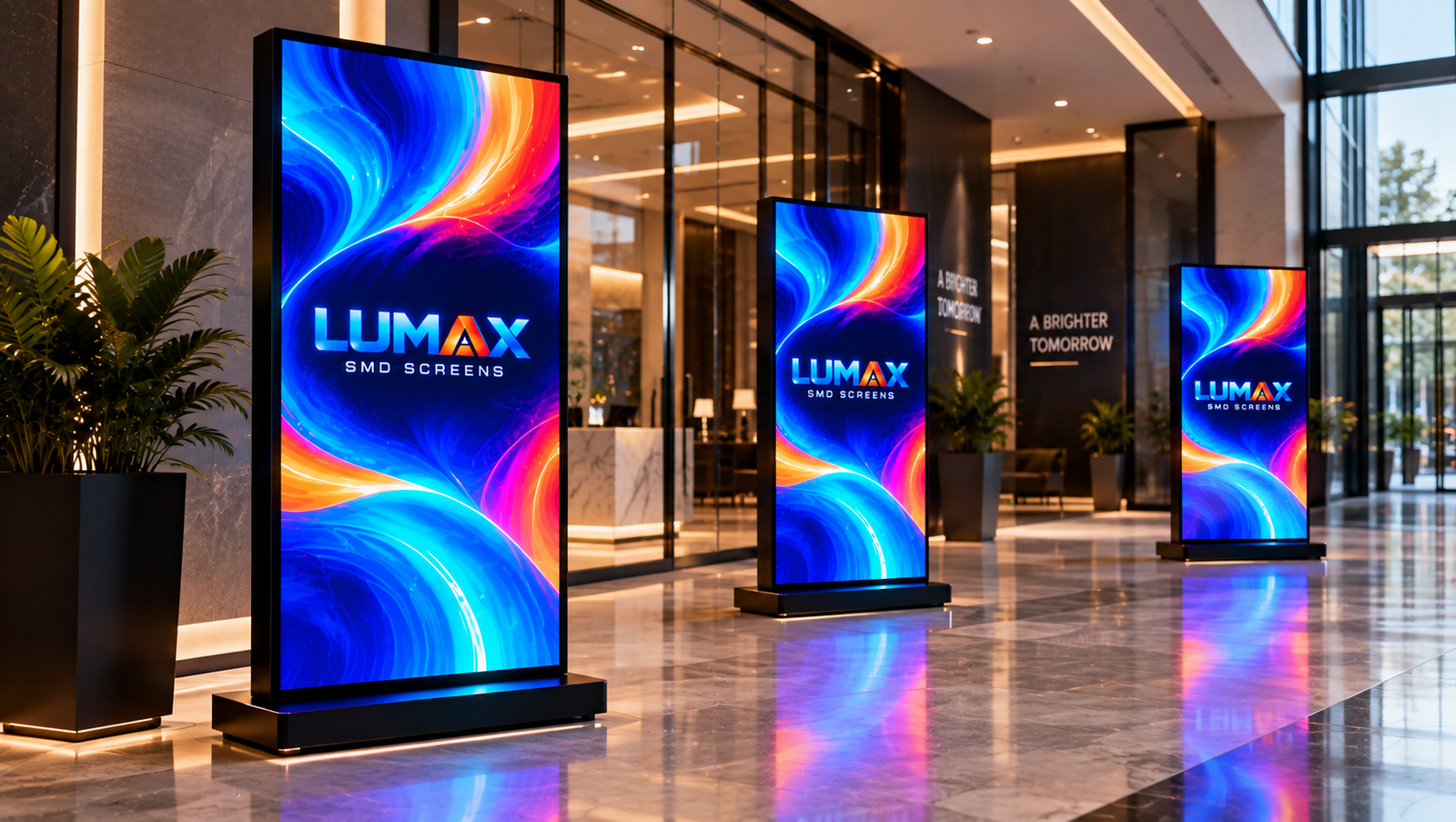
Yes. Share your application, location, screen size, closest viewing distance and whether the screen is indoor or outdoor. These details provide the starting point for recommending a suitable display solution.
Technical support depends on the screen hardware, condition and availability of compatible components. Share photos, the screen model if available and a description of the problem so the issue can be assessed.
Ideally provide your required screen width and height, indoor/outdoor location, closest viewing distance, application, preferred content type, installation location and any available site photos. This allows the project to be evaluated more accurately.
You can contact LUMAX through WhatsApp at 0339 9443357 or use the enquiry/contact options provided on the website.
READY TO START?

Let's Turn Your Requirements Into A Display.

Tell us what you want to display, where you want to install it and how large it needs to be. We'll help you identify the right direction for your project.

Technical information and recommendations on this page are general guidance. Exact product specifications, pricing, warranty terms, installation requirements and maintenance requirements depend on the selected model, manufacturer, project environment and final quotation.


Scroll to Top