
The Complete
SMD Screen Guide.
Everything you need to understand SMD LED screens — from pixel pitch and viewing distance to brightness, refresh rate, indoor and outdoor applications, and choosing the right display for your project.
What Exactly Is an SMD Screen?
SMD stands for Surface-Mounted Device. In an SMD LED display, LED components are mounted directly onto the display module to create a dense grid of pixels.
Thousands of these LED pixels work together to produce images, videos, text, graphics and live content across a large digital display.
Unlike traditional display technologies, SMD LED screens can be built into very large seamless display surfaces without the visible bezels found between conventional LCD panels.
An SMD screen is a modular LED display made from many small LED pixels working together as one large digital screen.
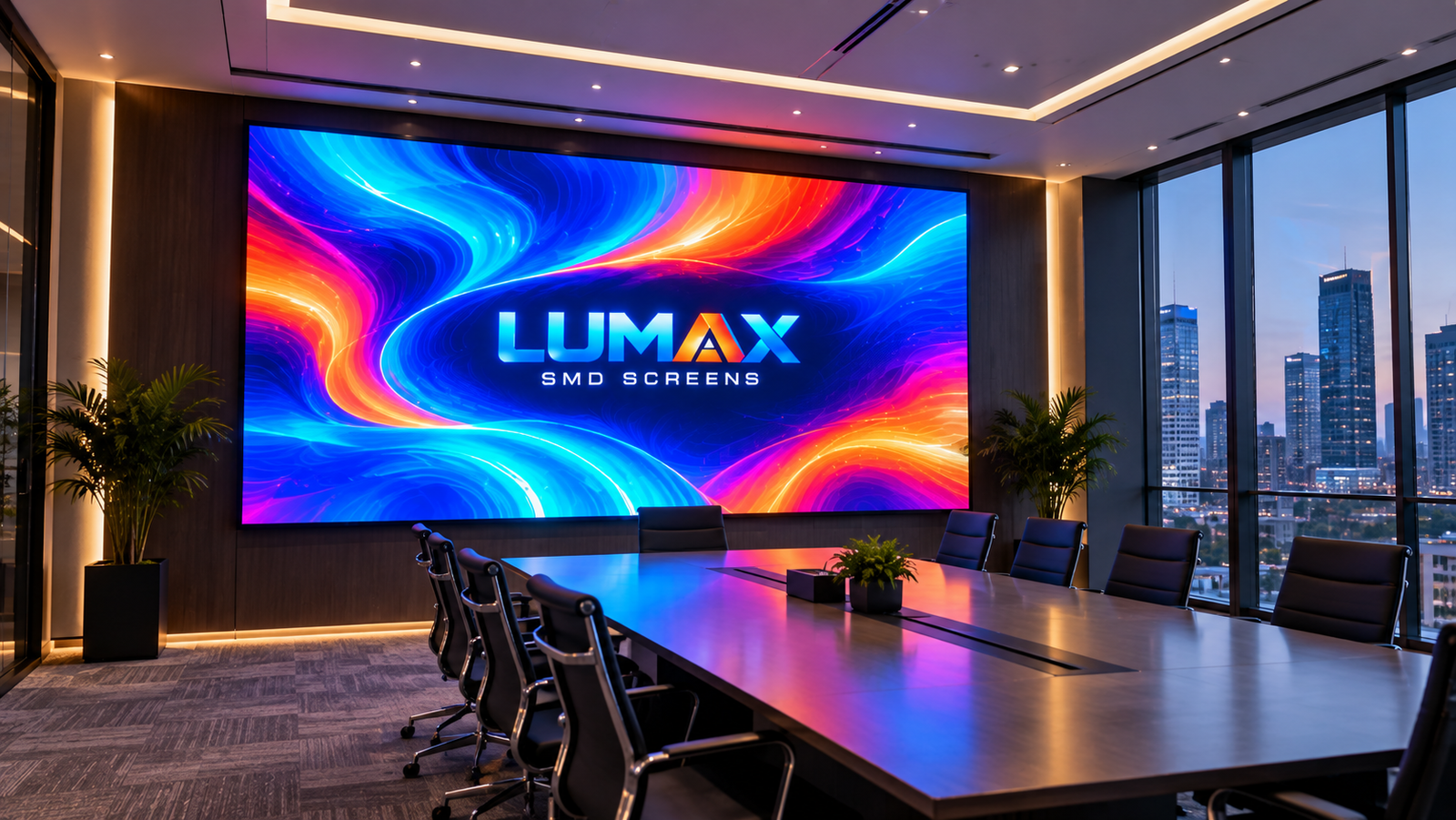
Don't Choose a Screen
by Size Alone.
A good SMD screen specification is a combination of several factors. Understanding these six areas will make it much easier to compare different display solutions.
Pixel Pitch
The distance between adjacent pixels, measured in millimetres. Smaller pitch generally provides higher pixel density and is better suited to closer viewing.
Viewing Distance
The closest distance from which viewers will normally watch the screen. It is one of the most important factors when selecting pixel pitch.
Brightness
Measured in nits, brightness determines how clearly the display can be seen under ambient light. Outdoor displays require substantially higher brightness than indoor walls.
Refresh Rate
A higher refresh rate can help deliver smoother video and cleaner camera footage, especially for events, broadcast and professional content.
IP Protection
IP ratings indicate protection against solid particles and water. Outdoor screens need weather-rated cabinets designed for their installation environment.
Cabinet & Maintenance
Cabinet construction, access method, module replacement, power design and service access all influence the long-term practicality of an LED installation.
Smaller Pitch.
More Detail.
Pixel pitch is the centre-to-centre distance between adjacent LED pixels. As a general principle, smaller pixel pitch means more pixels can fit into the same physical area.
The correct pitch depends heavily on the closest viewing distance, content requirements, environment and budget. Choosing the smallest possible pitch is not automatically the best decision.
Close-viewing corporate, premium retail and high-detail indoor applications.
A popular choice for conference rooms, lobbies, retail and indoor events.
Suitable for many indoor and selected semi-outdoor applications.
Common for outdoor advertising and displays viewed from moderate distances.
Larger outdoor displays where viewers are significantly farther away.
Choose Pitch Based on
Where People Will Stand.
Viewing distance is not an exact formula for every project, but it is a useful starting point when comparing pixel pitches.
Indoor or Outdoor?
These are not simply two versions of the same screen. Indoor and outdoor LED displays are designed around very different environmental requirements.
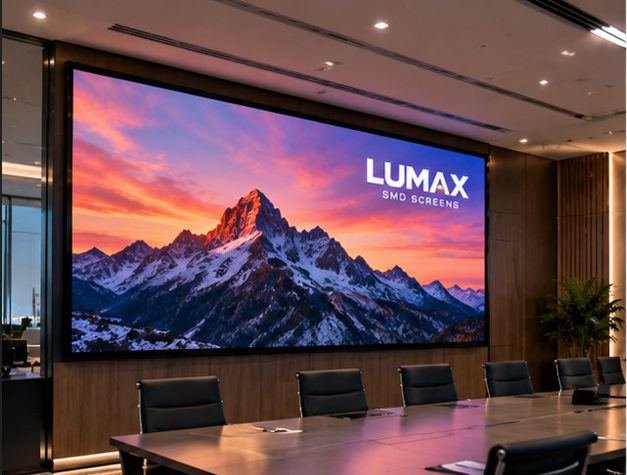
Indoor SMD Screens
Designed for controlled environments where close viewing, fine detail, colour quality and high refresh performance are important.

Outdoor SMD Screens
Designed for sunlight, weather exposure and long-distance visibility, with weather-rated cabinets and higher brightness requirements.
Four Specifications
Worth Understanding.
When comparing SMD screen quotations, don't look only at the price per square foot. Understand what the technical specification actually means.
Brightness
Brightness is measured in nits. Indoor displays generally require much less brightness than displays exposed to direct sunlight. More brightness is not automatically better for every application.
Refresh Rate
Refresh rate affects how smoothly the display handles motion and how it appears on cameras. Professional applications often benefit from high-refresh processing.
Protection Rating
IP protection describes resistance against solids and water. The correct rating depends on the actual installation environment and cabinet design.
How to Choose the
Right SMD Screen.
Follow these four steps before requesting a final quotation. It will make the technical discussion much easier.
Define the Location
Decide whether the display will be fully indoor, semi-outdoor or exposed to outdoor weather.
Measure Viewing Distance
Identify the closest regular viewer. This is one of the strongest inputs for choosing pixel pitch.
Define Your Content
Consider whether you mainly display text, advertising, presentations, graphics, video or mixed content.
Set Your Budget
Compare total project cost, not only screen area. Cabinet, processor, structure, installation and support can all affect the final quotation.
Find the Right Screen
for Your Project.
Use the LUMAX SMD Screen Calculator to get a starting recommendation for screen size, pixel pitch, resolution and indicative budget.
Common Questions.
A few quick answers to the questions buyers usually ask before selecting an LED display.